
A salt tablet making machine converts prepared salt powder into compact tablets through mechanical compression. These tablets are commonly used in water softening systems and industrial water treatment. Understanding how the machine works helps manufacturers prepare suitable raw materials, improve tablet quality, and maintain stable production.
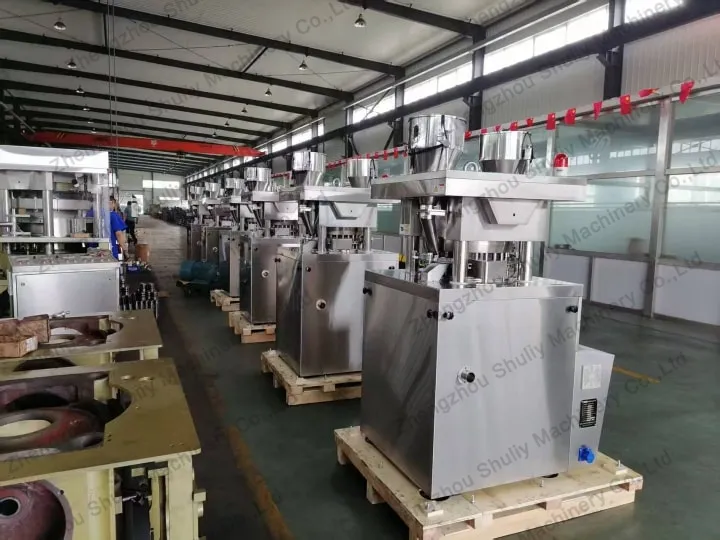
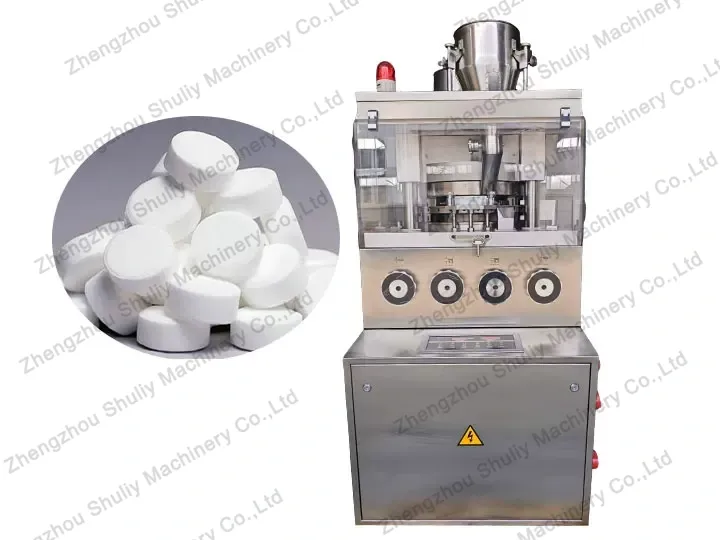
Work pressing process of salt tablet
The salt tablet production process generally involves the following stages.
Step 1: Raw material preparation
Before using the salt tablet making machine, the salt must be prepared to ensure consistent feeding and forming. Moisture content, particle size, and powder flowability can all affect the compression process. Depending on the raw material, screening or other pretreatment may be necessary.
Step 2: Feeding the salt powder
The prepared salt powder is fed into the salt tablet press machine’s feeding system and distributed into the die cavities. Consistent feeding helps ensure that each cavity receives an appropriate amount of material, supporting uniform tablet weight and size.
Step 3: Compression and forming
The salt tablet making machine applies mechanical pressure through its punches and dies, compacting the salt powder into the required tablet shape. The applied pressure and tooling design influence tablet density, hardness, thickness, and overall appearance.
Step 4: Tablet ejection
After compression, the formed salt tablet is released from the die. The finished tablets are then collected for inspection and subsequent handling. Depending on the production setup, additional conveying or packaging equipment can be used.
What affects salt tablet quality?
Producing salt tablets with uniform specifications involves more than just the salt tablet making machine itself. Several factors influence the final product:
- Raw material condition: Particle size distribution, moisture content, and flowability affect how evenly the salt powder fills the dies and compacts under pressure.
- Compression force: Insufficient pressure may produce weak tablets, while unsuitable compression conditions can cause defects or increase wear on machine components.
- Die and punch design: The tooling determines the tablet’s shape and dimensions and must be suitable for the intended product.
- Consistent feeding: Uneven filling can lead to variations in tablet weight, thickness, and density.
- Machine maintenance: Regular inspection and cleaning help maintain stable operation and reduce unplanned downtime.
How to choose a suitable salt tablet press machine?
When selecting a salt tablet making machine, manufacturers should consider their production requirements rather than focusing on rated output alone.
First, determine the required tablet shape, diameter, thickness, and weight. Next, evaluate the expected production capacity and the characteristics of the salt powder. It is also important to check whether the machine’s tooling, feeding system, and discharge arrangement suit the intended application.
For larger production operations, consider how the press will connect with raw material handling, finished-tablet collection, and packaging equipment.
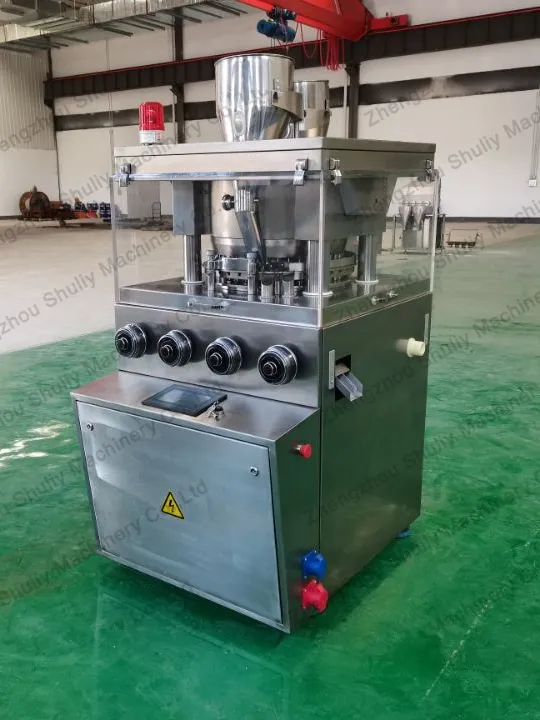
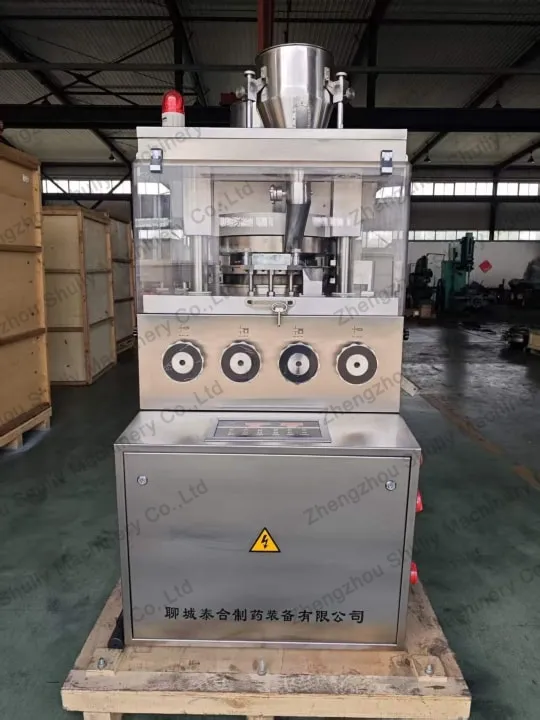
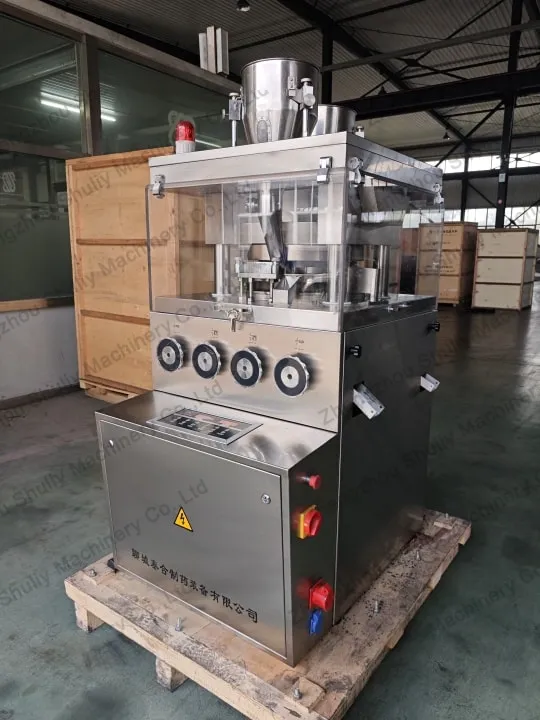
Get right solution for salt tablet production
Choosing a suitable salt tablet making machine starts with understanding your raw materials and finished-product requirements. A properly configured salt tablet press machine can help transform prepared salt powder into uniform, compact tablets for water treatment and other suitable industrial applications.
If you are planning a salt tablet production project, contact our team. We can help you evaluate a suitable machine configuration for your production needs.
